



A splash of hot water. A cup that tips just as you set it down. A kettle that suddenly feels heavier than it used to.
These things happen to everyone – especially when hands aren’t as steady as they once were. And while they might seem minor, everyday burns, spills and wobbles are often the moments that quietly knock confidence at home.
The good news?
Reducing risk doesn’t mean changing your lifestyle, giving up independence, or turning your home into something it’s not. Often, it’s about small, thoughtful changes that make everyday tasks feel safer and more manageable.
Why everyday kitchen tasks become riskier over time
As we get older, or when conditions like arthritis come into play, everyday movements can change:
- Grip strength may weaken
- Hands may shake or tire more quickly
- Lifting and twisting can strain joints
- Reaction time may slow slightly
In the kitchen, where hot liquids, heavy items and smooth surfaces are part of daily life, these changes can increase the chance of spills or burns – particularly when making tea or coffee.
This isn’t about decline. It’s about adapting.
Kettle safety for the elderly: why pouring matters more than lifting
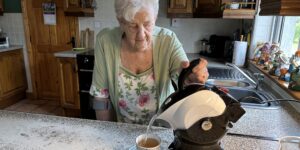
One of the most common household risks involves kettles. A full kettle is heavier than many people realise and lifting it while twisting the wrist to pour can be uncomfortable – or unsafe – for anyone with reduced strength or joint pain.
That’s why kettle safety for elderly users often comes down to one simple idea: Pouring with lifting.
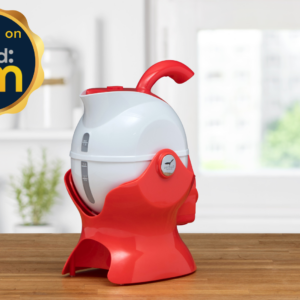
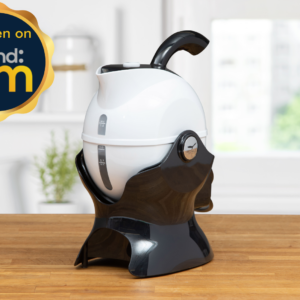
A kettle designed to tip rather than lift:
- Keeps the base stable on the counter
- Reduces strain on wrists, hands and shoulders
- Helps prevent over-pouring and splash
For many people, this single design change removes one of the biggest daily risks involving hot drinks.
Arthritis & hot drinks safety: small changes, big difference
If you live with arthritis, it’s often not the heat that’s the problem – it’s the effort.
Holding a cup steady, carrying it across the kitchen, or setting it down without wobbling can all feel surprisingly difficult on sore or stiff days. 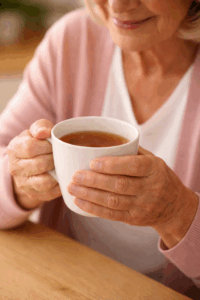
Simple daily living aids for seniors can help by:
- Improving grip and stability
- Reducing the need for tight squeezing
- Minimising movement while carrying hot drinks
Non-slip mats, stable trays and well-balanced cups don’t draw attention to themselves – they simply make tasks feel easier and safer.
Assistive products for kitchen safety don’t look ‘’assistive’’
One of the biggest misconceptions around assistive products for kitchen safety is that they look clinical or obvious. In reality, many modern daily living aids are designed to blend seamlessly into the home.
Good design focuses on:
- Stability instead of strength
- Balance instead of effort
- Confidence instead of caution
When products work with the body instead of against it, the kitchen becomes a place of normal routine again – not something to worry about.
For family members: supporting safety without taking over
If you’re a carer or a concerned family member, you may notice these small moments before your parent does:
- A hesitation before lifting the kettle
- A comment about ‘’clumsy hands’’
Introducing lightweight kettle for the elderly users or other safety-focused kitchen aids doesn’t have to be a big conversation. Often, it’s simply about choosing tools that remove risk quietly and respectfully.
The goal isn’t to take over – it’s to support independence.
Confidence grows when risk is reduced
Most people don’t want to stop doing the things they enjoy. They just want them to feel safe again.
Whether it’s making a morning cup of tea, carrying a tray to the table, or pouring hot water without worry, small changes can restore confidence where it matters most – in everyday life.
Reducing risk doesn’t mean losing independence – it often means gaining confidence.





Leave a Comment